

 United Kingdom (UK)
 United States (US)
 Canada
 South Africa
 India
 Australia
 New Zealand
 China
 Russia
 Germany
 France
 Spain
 Netherlands
 Vietnam
 United Arab Emirates
 Italy
 Poland
 Thailand
 Türkiye









 Algeria


Best Countries for TEFL Teachers: Maximizing Career Growth

Most American teachers are surprised to learn that over 60 percent of new TEFL positions open up each year outside traditional destinations like China and Spain. The growing demand for English instruction offers Americans opportunities for career growth and cultural discovery across continents. Understanding where to find the most rewarding roles helps you choose a destination that matches both your professional goals and your sense of adventure.
Table of Contents
- Defining The Best TEFL Destinations Worldwide
- Key Criteria For Ranking Top TEFL Countries
- Comparing TEFL Job Markets And Demand
- Understanding Salaries, Benefits, And Cost Of Living
- Navigating Visa And Legal Requirements
- Lifestyle, Culture, And Teacher Support Networks
Key Takeaways
| Point | Details |
|---|---|
| Ideal TEFL Destinations | Countries like South Korea, UAE, and Spain provide strong job markets, competitive salaries, and rich cultural experiences for TEFL teachers. |
| Key Evaluation Criteria | Assess job market stability, visa regulations, cost of living, and professional development opportunities when selecting a destination. |
| Financial Considerations | Understanding the balance between salary, benefits, and local living expenses is crucial for maximizing financial potential in TEFL roles. |
| Cultural Adaptation | Successful educators must navigate cultural differences and build support networks to thrive in international teaching environments. |
Defining the Best TEFL Destinations Worldwide
Navigating the global landscape of TEFL teaching requires strategic insights into destinations that offer exceptional professional growth opportunities. While numerous countries present appealing prospects, certain locations consistently stand out for their robust job markets, competitive salaries, and rich cultural experiences. Top destinations for teaching English abroad reveal a complex ecosystem of opportunities that extend far beyond traditional expectations.
Successful TEFL teachers understand that the ideal destination is not just about salary, but encompasses multiple critical factors. These include job market stability, visa regulations, cost of living, professional development potential, and cultural adaptability. Countries in East Asia like South Korea and China, the Middle East including United Arab Emirates and Saudi Arabia, and parts of Europe such as Spain and Poland consistently rank high for their comprehensive teaching environments. Each region offers unique advantages: East Asian markets provide high salaries and structured teaching systems, Middle Eastern countries offer tax-free compensation, while European nations present rich cultural immersion experiences.
Beyond geographic considerations, teachers must evaluate personal career objectives when selecting a TEFL destination. Best countries to make money teaching abroad demonstrate that financial compensation varies dramatically across regions. Some key considerations include:
- Salary potential and cost of living balance
- Professional development opportunities
- Language learning environments
- Cultural adaptation requirements
- Contract terms and benefits
- Potential for long-term career progression
Ultimately, the best TEFL destinations are those that align with individual professional goals, personal preferences, and long-term career trajectories. Thorough research, networking with experienced teachers, and understanding one’s own career aspirations are essential steps in making an informed decision about where to begin or advance a TEFL teaching career.
Key Criteria for Ranking Top TEFL Countries
Selecting the optimal TEFL destination requires a comprehensive evaluation of multiple interconnected factors that extend far beyond simple salary considerations. Top paying countries for TEFL teaching reveal a nuanced landscape where compensation represents just one dimension of potential career success. Experienced educators understand that ranking top TEFL countries demands a multifaceted approach considering professional, economic, and personal growth opportunities.
The primary criteria for evaluating TEFL destinations include several critical dimensions. Job market dynamics play a pivotal role, encompassing elements like employment stability, demand for English teachers, contract terms, and potential for career advancement. Salary levels must be contextualized within the local cost of living, ensuring that compensation provides genuine financial sustainability. Additional crucial factors include visa regulations, healthcare accessibility, professional development opportunities, cultural adaptability, and the overall quality of life in the potential teaching environment.
Specific ranking considerations for top TEFL countries typically involve:
- Average monthly salary potential
- Cost of living adjustment
- Work visa accessibility
- Contract duration and terms
- Healthcare and insurance provisions
- Professional development opportunities
- Cultural integration potential
- Language learning environment
- Safety and political stability
- Potential for savings and financial growth
Ultimately, the most successful TEFL teachers approach destination selection as a personalized strategic decision. While general rankings provide valuable guidance, individual career goals, personal preferences, and long-term professional aspirations must drive the final choice. Thorough research, networking with experienced professionals, and a realistic assessment of personal adaptability are essential steps in identifying the most suitable TEFL destination for sustained career growth.
Comparing TEFL Job Markets and Demand
The global TEFL job market represents a dynamic and evolving landscape of opportunities, characterized by regional variations and emerging trends. Are TEFL teachers in demand? reveals a complex ecosystem where employment prospects fluctuate based on geopolitical, economic, and educational developments. Understanding these market nuances is crucial for educators seeking sustainable and rewarding international teaching careers.
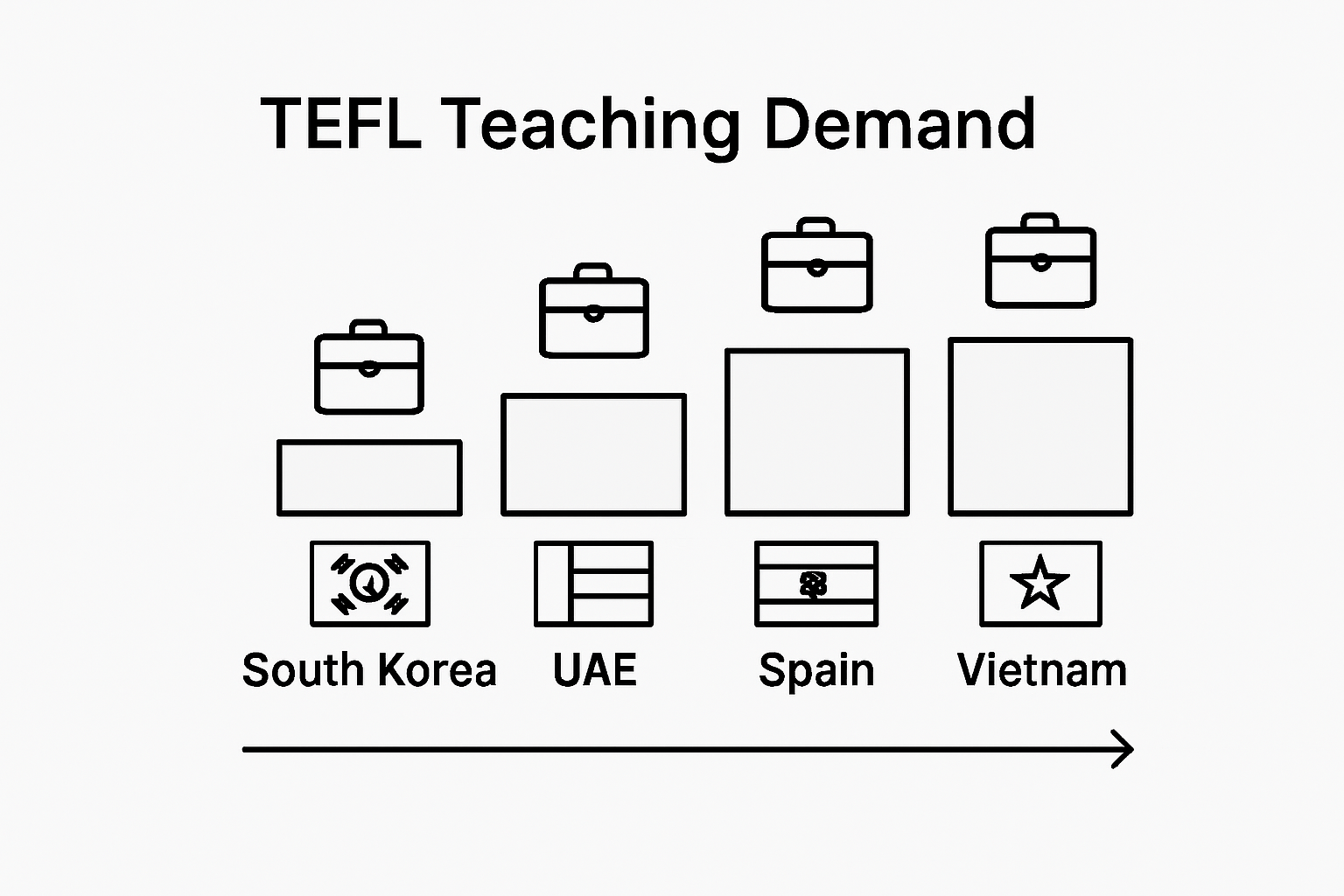
Regional job markets demonstrate significant diversity in demand, compensation, and employment conditions. East Asian countries like South Korea, China, and Japan consistently maintain robust markets for English language instructors, driven by strong educational systems and economic globalization. The Middle Eastern region, particularly United Arab Emirates and Saudi Arabia, offers competitive salaries and structured teaching environments. European markets present more competitive landscapes, with countries like Spain, Czech Republic, and Poland providing unique opportunities for TEFL professionals.
Key comparative factors in TEFL job market analysis include:
- Hiring requirements and qualifications
- Average monthly compensation
- Contract length and benefits
- Visa and work permit accessibility
- Professional development opportunities
- Urban vs. rural teaching environments
- Public vs. private sector employment
- Seasonal job market fluctuations
- Language proficiency expectations
- Cultural adaptation challenges
Successful TEFL teachers approach job market navigation as a strategic endeavor, recognizing that demand is not uniform across regions. Factors like economic conditions, government education policies, technological advancements, and global communication trends continuously reshape employment landscapes. Continuous professional development, adaptability, and a comprehensive understanding of regional market dynamics are essential for maintaining a competitive edge in the international English language teaching profession.
Understanding Salaries, Benefits, and Cost of Living
Navigating the financial landscape of TEFL teaching requires a nuanced understanding of compensation structures that extend far beyond base salary. How much do TEFL teachers make? reveals a complex ecosystem of financial opportunities where total compensation includes multiple layers of economic considerations. Smart educators recognize that true financial potential emerges from understanding the intricate balance between earnings, benefits, and local living expenses.

Compensation packages in TEFL destinations vary dramatically across regions, reflecting local economic conditions, demand for English instructors, and cost of living. East Asian countries like South Korea and China typically offer comprehensive packages including housing allowances, airfare reimbursement, and health insurance, which can significantly offset living expenses. Middle Eastern markets like United Arab Emirates and Saudi Arabia provide tax-free salaries that often exceed $2,500 monthly, coupled with housing and transportation benefits. European markets present more modest but still competitive compensation, with countries like Spain and Czech Republic offering salaries that align closely with local economic standards.
Every TEFL opening, salary and deadline that matters.
In your inbox every two weeks. Free, no spam, unsubscribe any time.
Teacher pay by country
New TEFL openings
Programme and visa dates
Key financial considerations for TEFL teachers include:
- Base monthly salary ranges
- Housing and accommodation provisions
- Health insurance coverage
- Travel and relocation allowances
- Potential for private tutoring income
- Tax implications and exemptions
- Savings potential after expenses
- Retirement and long-term financial planning
- Cost of living adjustments
- Supplemental income opportunities
Successful international educators approach financial planning as a holistic strategy, recognizing that raw salary figures represent just one component of overall economic well-being. Factors like local purchasing power, lifestyle expectations, professional growth potential, and personal financial goals must be carefully evaluated. Thorough research, strategic budgeting, and an adaptable mindset are essential for maximizing financial opportunities in the dynamic world of international English language teaching.
Navigating Visa and Legal Requirements
The complex landscape of international teaching demands a sophisticated understanding of legal and immigration frameworks. How to legalise a TEFL certificate illuminates the intricate process of meeting professional and governmental standards for teaching English abroad. Successful TEFL teachers recognize that navigating visa requirements is a critical step in transforming international teaching aspirations into tangible career opportunities.
Visa classifications for English language instructors vary dramatically across different regions, reflecting unique national policies and economic priorities. Each destination presents distinct legal requirements, documentation standards, and professional credentials needed for work authorization. East Asian countries like South Korea and China typically require comprehensive documentation, including authenticated degrees, criminal background checks, and specialized work permits. Middle Eastern nations such as United Arab Emirates and Saudi Arabia enforce stringent visa regulations with meticulous verification processes. European countries demonstrate more nuanced approaches, with requirements ranging from straightforward work permits in some nations to complex residency documentation in others.
Key legal and visa considerations for TEFL teachers include:
- Valid passport with minimum six month expiration buffer
- Authenticated academic credentials
- Criminal background clearance
- Professional TEFL certification
- Health examination certificates
- Specific work visa documentation
- Tax identification requirements
- Proof of financial stability
- Employment contract verification
- Language proficiency documentation
Successful international educators approach visa navigation as a strategic process, understanding that legal compliance represents the foundation of a sustainable teaching career. Thorough preparation, meticulous document management, and proactive communication with potential employers and immigration authorities are essential strategies for transforming complex bureaucratic requirements into seamless professional transitions.
Lifestyle, Culture, and Teacher Support Networks
The international TEFL experience transcends professional teaching, representing a holistic journey of personal transformation and cultural immersion. Popular TEFL destinations worldwide reveal complex ecosystems where professional opportunities intersect with profound cultural experiences. Successful educators approach international teaching as a dynamic lifestyle choice that demands adaptability, emotional intelligence, and genuine cross-cultural engagement.
Cultural adaptation represents a critical component of sustainable international teaching careers. Different regions present unique social landscapes that require nuanced understanding and strategic navigation. East Asian countries like South Korea and Japan emphasize collective social structures and hierarchical professional interactions, demanding sophisticated interpersonal skills. Middle Eastern destinations offer intense hospitality cultures with deep respect for professional relationships. European teaching environments typically provide more individualistic professional frameworks, encouraging personal autonomy and direct communication styles.
Key lifestyle and support network considerations include:
- Local expatriate community networks
- Professional teaching associations
- Online support forums and resources
- Cultural orientation programs
- Language exchange opportunities
- Mental health and wellness support
- Social integration strategies
- Personal safety considerations
- Cross-cultural communication workshops
- Professional mentorship programs
Successful international educators recognize that thriving in a new cultural environment requires more than professional competence. Emotional resilience, curiosity, open-mindedness, and a willingness to embrace uncertainty are fundamental qualities. Building robust support networks, maintaining mental flexibility, and developing genuine connections with local communities transform teaching experiences from mere professional assignments into profound personal growth journeys.
Unlock Your Global TEFL Teaching Potential Today
Choosing the best country for your TEFL career involves navigating challenges like visa regulations, salary expectations, and cultural adaptation. You want to maximize career growth while ensuring your lifestyle and professional goals align perfectly with your destination. Understanding factors such as job market dynamics, cost of living, and contract benefits is crucial to making the right decision.
Ready to transform your TEFL aspirations into reality? Our comprehensive online TEFL courses are designed to equip you with the certification and skills needed to succeed worldwide. Discover tailored training programs that match your ambitions and prepare you for rewarding opportunities in top TEFL destinations.
Start your journey now with TEFL Institute and gain access to essential resources, expert guidance, and flexible course options that empower you to teach English abroad with confidence. Visit TEFL Institute to explore courses and take the first step toward maximizing your international teaching career today.
Frequently Asked Questions
What factors should I consider when choosing a TEFL destination?
When selecting a TEFL destination, consider factors such as job market stability, visa regulations, cost of living, professional development opportunities, and cultural adaptability to ensure a better overall experience.
How do salaries for TEFL teachers vary by region?
Salaries for TEFL teachers can differ significantly by region. Compensation is influenced by local economic conditions, demand for English instructors, and the cost of living in the area, so it’s important to evaluate salary potential in the context of these factors.
What types of benefits can I expect when teaching abroad?
Compensation packages may include a base salary, housing allowances, health insurance, and flight reimbursements, among other benefits. Understanding these packages can greatly enhance your financial situation while living abroad.
How can I navigate visa requirements for teaching English abroad?
Navigating visa requirements involves preparing necessary documentation such as authenticated degrees, criminal background checks, and specific work permits, which vary by destination. It’s crucial to thoroughly research the visa process for your chosen country.
Recommended

Tara and Jess talk through different TEFL and EFL topics, from finding work abroad to life in the classroom.
