

 United Kingdom (UK)
 United States (US)
 Canada
 South Africa
 India
 Australia
 New Zealand
 China
 Russia
 Germany
 France
 Spain
 Netherlands
 Vietnam
 United Arab Emirates
 Italy
 Poland
 Thailand
 Türkiye









 Algeria


What Is ESL Certification and Why It Matters

ESL certification is a qualification that shows you have been trained to teach English to people who speak another language. For most jobs abroad and online, that means an accredited TEFL or TESOL certificate of at least 120 hours. Teaching ESL in a US public school is different, and needs a state teaching licence.
Key takeaways
- “ESL certification” is an umbrella term. In practice employers mean a TEFL, TESOL or CELTA certificate, or a state ESL endorsement for US public schools.
- For language schools abroad and online platforms, an accredited 120-hour TEFL certificate is the usual minimum.
- A regulated qualification, such as an Ofqual-regulated Level 5 diploma, can be checked on a government register, which matters in stricter markets.
- US public school ESL roles need a state teaching licence with an ESL endorsement, not a TEFL certificate alone.
- No ESL certificate replaces a degree where a country’s work visa requires one.
What is ESL certification?
ESL certification is proof that you have been trained to teach English as a second language, rather than simply that you speak English well. A good course covers grammar for teachers, lesson planning, classroom management, teaching speaking, listening, reading and writing, and how to adapt lessons for different ages and levels.
ESL stands for English as a Second Language. Strictly, it describes learners who live in an English-speaking country, while EFL (English as a Foreign Language) describes learners in a country where English is not the main language. Our guide to what ESL means explains the difference in more detail. In job adverts, though, the terms are used loosely, and “ESL certification” usually just means a recognised English teaching qualification.
What are the main types of ESL certification?
There are four qualifications you will see most often, and they suit different goals.
| Qualification | What it is | Typical format | Best for |
|---|---|---|---|
| TEFL | Teaching English as a Foreign Language | Usually 120 hours or more, online, in person or hybrid | Language schools abroad and online platforms |
| TESOL | Teaching English to Speakers of Other Languages | Similar to TEFL; the name is more common in North America and Australia | The same jobs as TEFL; employers treat the two as equivalent |
| TESL | Teaching English as a Second Language | Used mainly in Canada for teaching newcomers | Teaching English in English-speaking countries |
| CELTA | Cambridge Certificate in Teaching English to Speakers of Other Languages | Intensive course with assessed teaching practice | Adult teaching, often in Europe |
The name matters less than the quality behind it. Employers look at the number of hours, who accredits or regulates the course, and whether it includes assessed work. A 120-hour TEFL certificate and a 120-hour TESOL certificate open the same doors. For a closer look at the Canadian route, see our guide to the TESL certificate.
What is the difference between accredited and regulated ESL certification?
An accredited course has been reviewed by an outside body against its standard. A regulated qualification goes further: it sits on a government register, with its level and hours recorded, so anyone can look it up.
This matters because TEFL is not a regulated profession, and any company can call its course accredited. A regulated qualification removes the guesswork. Our Level 5 TEFL Diploma is Ofqual-regulated, listed on the public Ofqual register as qualification 610/1571/4, and awarded by Highfield Qualifications. We are Highfield approved centre 21335, so an employer or visa office can check both the qualification and the centre.
Before you pay for any course, check three things: whether the qualification appears on a public register, which body awards it, and how an employer can verify your certificate afterwards.
Which ESL certification do employers ask for?
Most employers abroad and online ask for an accredited TEFL or TESOL certificate of at least 120 hours. That is the level behind most adverts that say “TEFL required”, and it is accepted by most language schools, government programmes and online teaching platforms. Our 120-hour TEFL certificate meets that standard.
Some markets and roles ask for more. Better paid jobs in the Gulf and East Asia, and posts that involve exam preparation or older learners, increasingly favour a Level 5 qualification. On South Korea’s EPIK programme, a TEFL certificate can also place you on a higher pay level.
Remember that the certificate is only one part of an application. Many countries also require a bachelor’s degree for the work visa, and no ESL certificate replaces it. Our guide to teaching English abroad sets out the degree and visa rules region by region.
Do you need ESL certification to teach in US public schools?
Yes, but it is a different kind of certification. To teach ESL in a US public school, you normally need a state teaching licence with an ESL or English Learner endorsement, issued by your state’s education department. Requirements differ from state to state and usually include a degree, an approved teacher preparation programme and state exams.
A TEFL or TESOL certificate on its own does not qualify you for a US public school ESL post. It is, however, widely accepted for private language schools, adult education programmes, online teaching and work abroad. If you are planning a US public school career, check your state education department’s licensing pages first.
Academic
From certificate to first ESL job
Hiring windows close while you scroll.
Every TEFL opening, salary and deadline that matters.
In your inbox every two weeks. Free, no spam, unsubscribe any time.
Teacher pay by country
New TEFL openings
Programme and visa dates
Deadlines, salaries and visa notes for teaching jobs worldwide, checked against official sources and sent free every two weeks.
Get on the WireHow do you get ESL certification?
For teaching abroad or online, getting certified takes four steps.
- Decide where you want to teach. The country and type of employer decide the level you need, so start there rather than with price.
- Choose an accredited or regulated course of at least 120 hours. Check the register, the awarding body and how certificates are verified.
- Complete the modules and assessed work. Online courses let you study at your own pace, with a tutor marking your written work.
- Receive your certificate and start applying. A TEFL certificate does not expire, so it stays valid however long your job search takes.
For the detailed route, including how long each option takes and how to choose between them, read our step by step guide to ESL teacher certification.
How long does ESL certification take?
A 120-hour online TEFL certificate usually takes four to eight weeks of part-time study. A Level 5 diploma usually takes eight to sixteen weeks. Intensive full-time courses with classroom practice run for around four weeks, but require you to study full time.
Online courses have no fixed timetable, so you can go faster or slower around work or study. Our courses give you six months to finish, and most people complete the Level 5 in ten to twelve weeks.
Is online ESL certification accepted?
Yes, provided the course is accredited or regulated. Employers care about the awarding body, the level and the hours, not whether you studied in a classroom or at home. Your certificate does not say “online” on it.
The exceptions are roles that specifically ask for observed teaching practice with real learners. If an employer or a teacher training route requires that, check their exact wording before you enrol. Our hybrid Level 5 Advanced Diploma includes ten hours of live teaching practice over Zoom with a trainer.
How much does ESL certification cost?
The cost depends mainly on the hours, the level and whether the course includes live teaching practice. A 120-hour online certificate is the cheapest route into teaching. A regulated Level 5 diploma costs more because it is longer, externally assessed and recorded on a government register, and courses with in-person or live teaching practice cost the most.
When you compare prices, compare like with like. Check the number of hours, whether a tutor marks your work, whether the qualification is regulated, and whether there are extra fees for certificates, postage or legalisation. Our certificate legalisation guide explains that last step, which some countries require for a work visa. Current prices for our own courses, including any sale and the interest free instalment option on the diplomas, are shown in your local currency on each course page.
Can non-native English speakers get ESL certification?
Yes. What matters is a strong command of English and the ability to teach it, not where you were born. Many employers actively value teachers who learned English themselves, because they understand the learner’s experience first hand.
The limits come from visas rather than from the certificate. Some countries restrict teaching visas to certain nationalities, most notably South Korea, whose E-2 visa is open only to citizens of seven English-speaking countries. Online platforms and many schools in Europe and Latin America are more open.
Does ESL certification expire?
No. A TEFL or TESOL certificate is valid for life and never needs renewing. That said, teaching methods and employer expectations move on, so many teachers add a specialist course later, for example in teaching young learners, business English or exam preparation, to stay competitive for better paid roles.
What mistakes should you avoid when choosing ESL certification?
- Buying on price alone. A very cheap certificate that an employer cannot verify can cost you the job it was meant to win.
- Trusting the word “accredited” without checking it. Find out who the accrediting body is and whether it is independent.
- Choosing fewer than 120 hours. Shorter courses fall below what most employers ask for.
- Ignoring visa rules. Check the degree and nationality requirements for your target country before you pay for any course.
- Assuming a TEFL certificate qualifies you for US public schools. It does not; you need a state licence for those posts.
Get your ESL certification
If you want an ESL certification that employers and visa offices can check, start with a regulated qualification. Our Level 5 TEFL Diploma is Ofqual-regulated and studied online at your own pace, and the free three-day trial lets you try real modules before you enrol. The TEFL Institute Group has certified 161,000 teachers since 2017, now working in 80 countries.

Katie Troy
Managing Director. With the TEFL team since 2018, a qualified teacher with a degree in education and years of experience teaching abroad, working closely with the academic team.
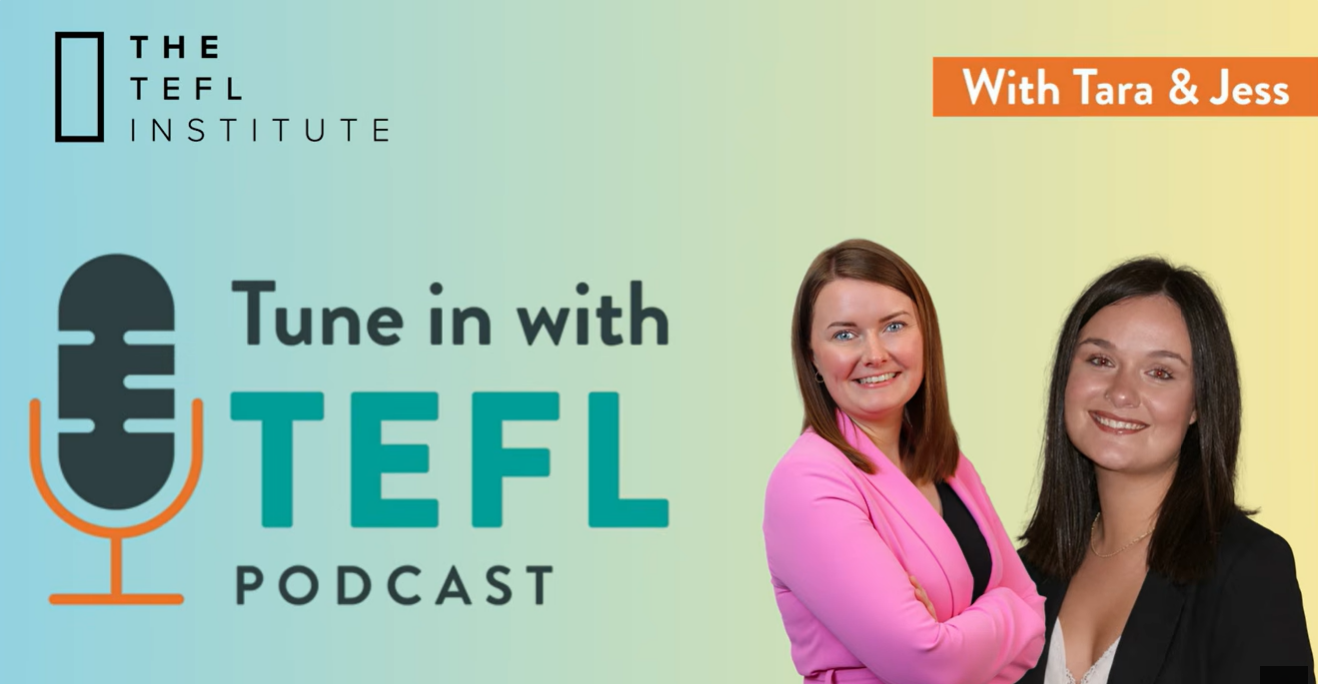
Tara and Jess talk through different TEFL and EFL topics, from finding work abroad to life in the classroom.
FAQs
Questions students ask us
ESL certification is a qualification showing you have been trained to teach English to speakers of other languages. For jobs abroad and online it usually means an accredited TEFL or TESOL certificate of at least 120 hours, covering grammar, lesson planning, classroom management and teaching the four skills.
In practice, yes. Employers use ESL certification, TEFL and TESOL to mean the same kind of qualification. TEFL is the more common name in the UK and Ireland, TESOL in North America, and a 120-hour certificate of either kind opens the same jobs.
A 120-hour online TEFL certificate usually takes four to eight weeks of part-time study, and a Level 5 diploma usually takes eight to sixteen weeks. Online courses have no fixed timetable, so you can study faster or slower around work.
Yes, if the course is accredited or regulated. Employers look at the awarding body, the level and the hours rather than how you studied. A regulated qualification, such as an Ofqual-regulated Level 5 diploma, can be checked on a public government register.
No. US public schools require a state teaching licence with an ESL or English Learner endorsement, issued by the state education department. A TEFL certificate is accepted for private language schools, adult programmes, online teaching and work abroad.
No. A TEFL or TESOL certificate is valid for life and never needs renewing. Many teachers add specialist courses later, such as teaching young learners or business English, to stay competitive for better paid roles.
